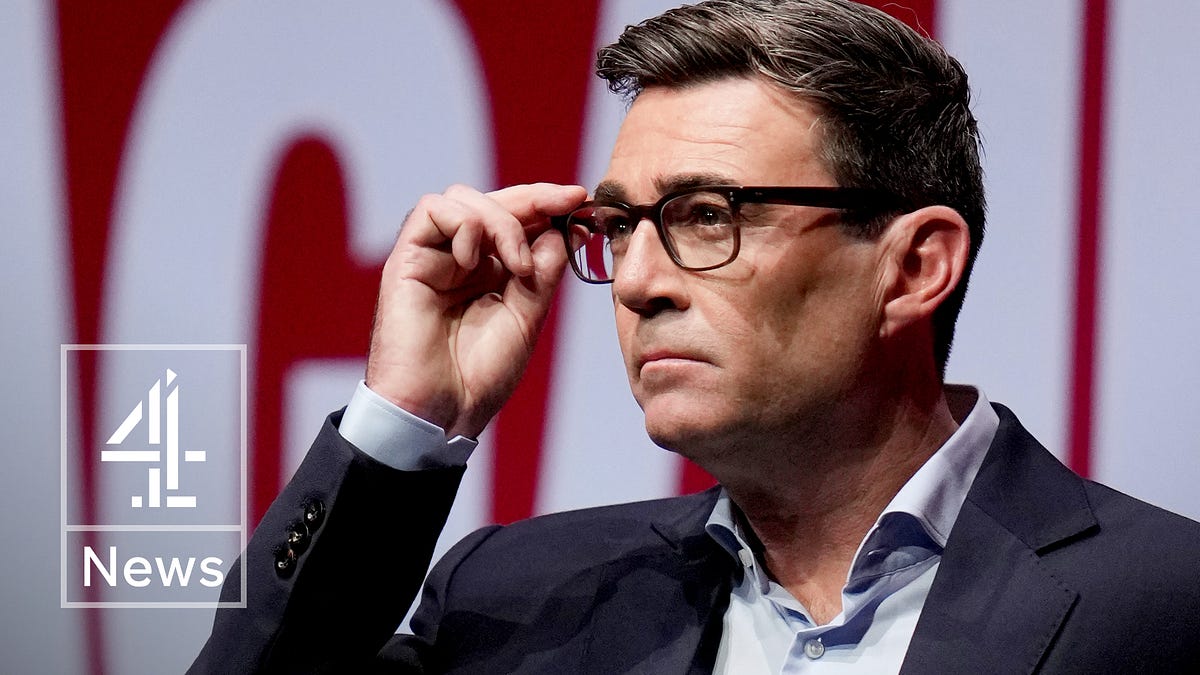

By Georg von Harrach British Prime Minister Andy Burnham has opened the door to the possibility of the UK rejoining the European Union in a risky change of strategy for the government. Subscribe In a speech to the Labour party conference yesterday, Burnham said that Brexit was not working. “Brexit has done more harm than good,” he said. “I will lay out to the country what I believe the different options are for Britain’s long-term relationship with our European partners.” And if that was ambiguous, this morning he went further, confirming that one of those options could be Britain rejoining the club. EU reaction The reaction from the EU side today has been largely enthusiastic. French President Emmanuel Macron said that if Britain decided to rejoin the European Union it would be “a good decision.” He also claimed that Brexit was “biggest lie of the last 30 years.” While Spanish Prime Minister, Pedro Sánchez said he would welcome the UK back “with open arms.” [ ]( https://channel4news.substack.com/p/10-years-of-brexit-how-successful ) [ 10 years of Brexit: What has happened since? ]( https://channel4news.substack.com/p/10-years-of-brexit-how-successful ) Kiran Moodley · Jun 24 [ Read full story ]( https://channel4news.substack.com/p/10-years-of-brexit-how-successful ) But 10 years after the 2016 referendum, Brexit remains a divisive issue in British politics and by dangling the possibility of rejoining, Andy Burnham has reopened a can of worms his predecessors attempted to bury. Other options? Rejoining the EU is not the only option though. So what other path could the UK take? During the Brexit negotiations, the EU’s chief negotiator, Michel Barnier , presented the UK with a graphic of descending steps. EU membership – what the UK had had for more than 40 years – was on the top step. The more the UK wanted to diverge from the EU, the less the EU would offer in return and the further down the steps the UK would descend. What was finally agreed put Britain somewhere near, but not at, the bottom. Expensive red tape Britain got complete free trade with the EU, a step up from the likes of Canada and South Korea and their very extensive FTAs with the European Union. But the UK refused to join a customs union because it wanted the freedom to do its own trade deals so it got a more distant deal than Turkey on some traded goods. And that has undoubtedly made it more difficult for British firms that sell to the rest of Europe. [ ]( https://channel4news.substack.com/p/10-years-of-brexit-what-taking-back ) [ Was Brexit self-harm or ‘taking back control’? ]( https://channel4news.substack.com/p/10-years-of-brexit-what-taking-back ) Kiran Moodley · Jun 25 [ Read full story ]( https://channel4news.substack.com/p/10-years-of-brexit-what-taking-back ) Although there are no tariffs to pay, there is persistent and expensive red tape to tackle in order to export to the European Union. Food and drink has been particularly problematic. Keir Starmer pledged to make a so-called veterinary agreement with the EU which would have done away with some of the most cumbersome checks, but he was not able to get a deal over the line before he was forced out of office. The series of Conservative governments that oversaw the Brexit negotiations firmly ruled out EU freedom of movement of people and accepting jurisdiction from the European Court of Justice. Migration Brits lost the right to live, work and study in the EU, and vice versa, but it also ended the UK’s role in EU migration policies, meaning the UK also lost the ability to return failed asylum seekers to the first EU country they had arrived in such as Italy and Greece. “Control over immigration was weakened when we lost collaboration with our European partners,” Burnham claimed in his speech. If the UK now chooses a closer relationship, it could revisit those red lines, including potentially opting into the Pact on Migration and Asylum, the EU’s new – and so far largely untested – scheme for dealing with illegal migrants. Under that arrangement, Britain would be able to send migrants back to mainland Europe, but have to take a share of settled asylum seekers in return, or pay another EU country to look after them. That would obviously be controversial, but some believe it would help to curtail the traffickers sending small boats across the English Channel. Norway model Norway and Iceland, along with Liechtenstein, have the closest relationships with the EU without being members. If the UK doesn’t want to rejoin, could that be an option? Share Norway benefits from the economic clout of being part of the EU single market, but in return must accept most EU law without having much of a say on it. And they have to make a contribution to the EU’s budget to the tune of billions of Euros. Switzerland has also previously been touted as a possible model, although its hotch potch of bilateral deals with the EU lead to not infrequent disagreements. What does Britain want? It will be key for the Prime Minister to decide what Britain wants to achieve. “Businesses want a strategic long-term plan to make trade with our largest export market easier, cheaper and faster,” said Shevaun Haviland, Director General of the British Chambers of Commerce. Whatever the UK does will require negotiation and compromise. And one of the risks for Burnham – having opened the Brexit box – is if he fails to achieve a better deal. One EU diplomat I spoke to also added a note of caution. “We’ll await concrete proposals from the UK side. Like with the previous PM’s there is no space for cherry picking, so more ambition in the EU relationship also requires the UK to chip in and do their part,” he said. Simon Coveney, pictured below, was Ireland’s foreign minister through much of the Brexit negotiations. He told me it is also a question of where Britain sees itself in a “hostile and unpredictable” world. “Ireland will always welcome and support moves by a British government to move closer to the EU, on trade, security and political cooperation. And yes we would of course welcome a return to full EU membership at some point in the future, as long as British public support is sustainable and strong.” A long overdue UK-EU summit is expected to take place before the end of the year. By then, Andy Burnham has pledged to have his options on the table. “I will see if we can find consensus around one [option] which will give us clarity about our position, and the future of the continent we live in,” he said. That doesn’t give him long. Subscribe Share Channel 4 News Leave a commentRead More

Is Britain heading back to the EU?