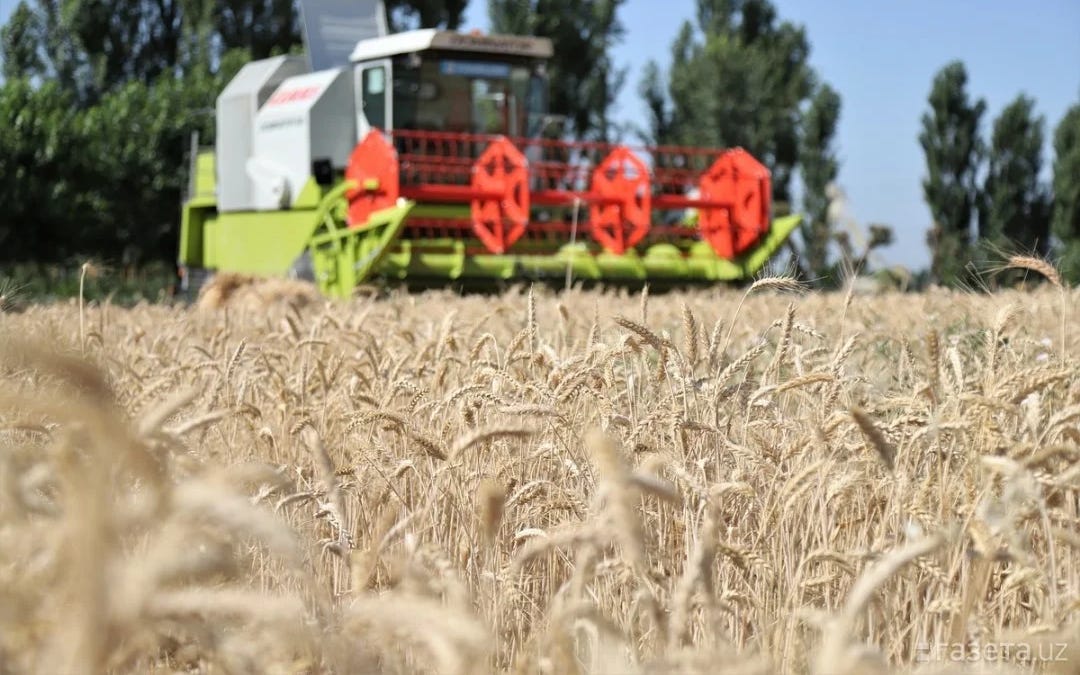

Executive Summary: On August 28, the Institute of Economics of the Russian Academy of Sciences published a report calling for deeper agricultural integration among the Eurasian Economic Union (EAEU) member states as the bloc prepares for potential increases in global food insecurity because of the U.S.–Iran Strait of Hormuz standoff. Russia’s war against Ukraine and the Iran conflict are pushing Russia and other EAEU members to maximize agricultural self-sufficiency, even as Russian strikes on Black Sea infrastructure increase grain shortages. The push for increased agricultural integration within the EAEU contrasts with Moscow’s anti-immigration policies, which may undermine the bloc’s plans for a common labor market. The Institute of Economics of the Russian Academy of Sciences (RAN) outlined three scenarios for the near-term future of Eurasian agriculture in an August report. Two of these scenarios assume the Strait of Hormuz will remain closed. The report, entitled “The Near East Crisis and Food Security: Consequences for the EAEU Agricultural Complex,” illustrates how the Eurasian Economic Union (EAEU) is seeking to adapt to a more fragmented global economic order. It notes that the EAEU remains one of the few regions able to fulfill nearly all—between 80–95 percent, according to the report—of its agricultural needs domestically ( Vestnik Instituta Ekonomiki Rossiiskoi Akademii Nauk , August 28). The RAN paper argues that the extensive sanctions placed on Russia and Belarus following the Kremlin’s war against Ukraine forced major adaptations, including import substitution for agricultural machinery, that ultimately led the EAEU’s member states toward deeper cooperation and a shift toward common agricultural policies. It does not discuss Russian and Ukrainian strikes in the Black Sea as another factor impacting global food security (see EDM , September 25). The RAN paper cites a 2023 Eurasian Development Bank report that predicts that Russia, Belarus, Kazakhstan, Kyrgyzstan, and Armenia could produce enough food to feed 600 million people by 2035 because the bloc controls 10 percent of global arable land but only 3 percent of the world’s population ( Kommersant , August 9). Agriculture is a major source of employment for Armenia, Kyrgyzstan, and Belarus, employing 56 percent, 39 percent, and 22 percent of the respective countries’ workforces according to the RAN paper. Russia has become the world’s largest exporter of wheat and a major corn exporter, with massive growth over the past several years ( Interfax , May 15). Russia’s position as the world’s leading wheat exporter gives the EAEU considerable weight in global agricultural markets. The study also examines three separate scenarios resulting from the continued standoff in the Strait of Hormuz. The first sees the conflict ending quickly, with a resumption of global trade. The second foresees no stable solution to the standoff and the EAEU using its agricultural prowess as a geopolitical tool, with states of the Near East and South Asia becoming more dependent on the bloc for agricultural commodities amid global fertilizer shortages and continued inflationary shocks. The final scenario envisions a situation in which rising global inflationary pressures and geopolitical fragmentation caused by the Strait of Hormuz standoff lead the EAEU to mostly close off its agricultural markets, with radically reduced exports and high tariffs ( Vestnik Instituta Ekonomiki Rossiiskoi Akademii Nauk , August 28). The report recommends that the EAEU create a strategic fund containing grain, fertilizer, and seeds, as well as an import substitution regime for key items such as genetic material for agricultural commodities. These measures would reduce dependence on external suppliers while giving the bloc greater capacity to manage future disruptions. The report comes as the EAEU prepares for deeper integration within the agricultural sector, with Kazakhstan pushing for a unified market with a shared registry, standards, and digital record-keeping. This includes the use of artificial intelligence and the expansion of a system whereby grain can be used for financial credit across the trade zone ( KNews.kz , August 14). Russian Agriculture Minister Oksana Lut stated that Moscow was already able to fulfill all of its internal needs in “key areas” of agriculture last year, while statistics provided at the meeting claimed that the trade bloc is now able to satisfy 93.5 percent of agricultural needs, with a near-future goal of full self-sufficiency. According to the Eurasian Economic Commission Minister for Energy and Infrastructure Arzybek Kozhoshev, Moscow’s policies are undermining other aspects of the trade bloc, most notably the creation of a common labor market ( AKIPress , September 8). Kozhoshev said that Kremlin restrictions on immigration undermine the policies adopted by the Eurasian Economic Commission, which sought to create free movement of labor between the constituent member states, with the eventual goal of a unified labor market. These restrictions will also likely have a negative impact on efforts by Moscow to court Uzbekistan and Tajikistan for EAEU membership, as both post-Soviet Central Asian states have traditionally depended heavily on remittances from guest workers employed in Russia. These new policies have already had a marked effect on the number of guest workers entering Russia. During the first half of 2026, work-related entries by citizens of Uzbekistan, Tajikistan, and Kyrgyzstan fell by about 15.6 percent, from more than 3.2 million in the same period of 2025 to approximately 2.7 million. Deportation actions have risen markedly, while the number of foreigners working legally has notably increased ( Rhythm of Eurasia , September 14). The restrictions will also likely have an adverse effect on Russia’s efforts to offset its aging population through immigration. Citizens of Tajikistan have received Russian citizenship in great numbers over the past decade, with 78,000 becoming Russian citizens in 2025 and nearly 800,000 since 2015 ( TASS , May 11; see EDM , July 23). These divergent policy trends suggest that the EAEU is drifting from a free trade zone and transforming into a geopolitical project for controlling commodities across post-Soviet Eurasia. Achieving full self-sufficiency in the agricultural sphere will be a serious challenge for the EAEU, and the RAN study and recent EAEU meetings demonstrate that the Russian-led trade bloc is preparing for serious long-term consequences from a prolonged Strait of Hormuz standoff, including a major breakdown in global food security. SubscribeRead More

EAEU Pushes Agricultural Integration Amid Global Food Security Risks