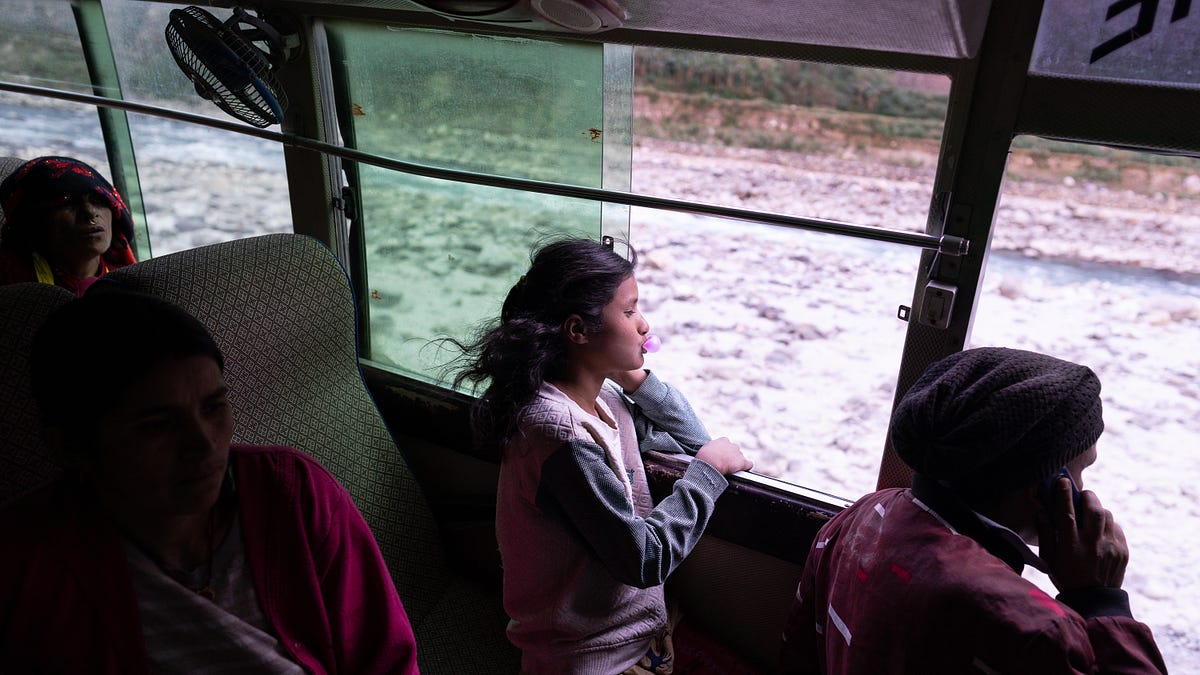

Mackenzie Knowles-Coursin is a photojournalist and fellow geographer who has spent more than a decade following people through migration, from a smuggler’s route across Europe to a gold mine in the Sahara to construction sites in the Gulf. His work is captivating and original, which is why it has appeared in such outlets as TIME , Foreign Policy , The Wall Street Journal , and the New Yorker . Mackenzie will join me to share some of his photos and the stories behind them, as well as how he went from studying geography to becoming a photojournalist and moving to his current home in Kenya. I’ve spent most of this newsletter on one half of that story, what happens to people once they enter the U.S. immigration system and the data begins. Court hearings, detention counts, and enforcement statistics can tell you a great deal, but they cannot show you everything that came before, why someone left, what the journey cost them, and who they were before any of it began. Mackenzie’s work explores the earlier parts of those stories on paths that do not always end up in North America—a good reminder that most of migration in the world is not to the United States, as politicians often like to sensationalize, but across and between countries in the Global South through so-called “South-South migration.” His current project, Waypoints , follows individual people over years, sometimes a decade or more, to see what actually happens to them long after the news cameras move on. A teenager from Syria he met on a smuggler’s route through Europe in 2014 is now a Swedish citizen and a newly graduated doctor. He has followed a young Malian man’s attempt to reach Europe through Mauritania and Morocco, and a Bangladeshi construction worker in Saudi Arabia saving toward a business back home. Waypoints recently reported from Nepal , with more on the way from Japan, the Philippines, and Syria. Talking with photographers about their craft is something I keep coming back to in this newsletter. When I wrote about Greg Constantine ’s detention project Seven Doors , and later sat down with him to talk through how he made it , the work required years of patient, close attention, returning to the same facilities and the same people to photograph immigration detention with the seriousness it deserves. Mackenzie works from that same conviction, telling migration through individual lives, across a much wider geography and at the other end of the journey. [Waypoints A publication documenting the movement shaping our world, and the lives at the center of it. By Mackenzie Knowles-Coursin ]( https://www.waypoints.media?utm_source=substack&utm_campaign=publication_embed&utm_medium=web ) Join Mackenzie Knowles-Coursin and me on Tuesday, July 7 at 10:00 AM Eastern for a live conversation. We will talk about what each of us tends to miss from the other’s vantage point, what gets lost when the journey and the system are covered as separate stories, and what a more complete account of migration might look like. This one is a Substack Live conversation, so you can watch right here in the Substack app. Subscribe below and turn on notifications to get the alert when we go live, and bring your questions. Here is some of what we will get into during the conversation. What it means to follow one person for a decade, and how a life keeps unfolding long after the border crossing that usually ends the story. The Syrian teenager Mackenzie met on a smuggler’s route in 2014, now a doctor and a Swedish citizen, and everything that happened in the years between. Why people leave home, what the journey asks of them, and who they are long before the news ever finds them. How Mackenzie earns the trust to tell these stories with care, and what keeps him returning to the same people year after year. The craft behind the photographs, how Mackenzie built a career in documentary photography, and what it means to cover migration while living and working outside the United States. Mackenzie Knowles-Coursin is a photojournalist and the founder of Waypoints , a publication documenting global migration and the lives at its center. Over more than a decade in documentary photography, with work for TIME, Foreign Policy, The Wall Street Journal, the New Yorker, and others, he has built a practice that stays with the same people across years and follows a single life as it changes. He lives and works in Nairobi, and reporting on migration from outside the United States shapes both what he sees and how he tells it. You can also follow his work on Instagram . Do you have questions for Mackenzie? Leave them in the comments below and I’ll do my best to bring them into the conversation. Leave a comment This newsletter, and live conversations like this one, are only possible because of reader support. If you are able, a paid subscription helps me keep bringing this kind of work to a wider audience. SubscribeRead More

Global Migration in Focus: Join Me for a Live Conversation with Photojournalist Mackenzie Knowles-Coursin